RDNA is the GPU architecture behind AMD’s Radeon RX 5000 through RX 9000 cards. “Radeon DNA” replaced AMD’s older Graphics Core Next (GCN) design in 2019, and it has been the foundation of every Radeon since. Understanding RDNA means understanding how AMD’s graphics cards changed inside, from the wave32 compute of the RX 5000 era to the ray tracing and chiplet designs of today.
RDNA is the microarchitecture AMD introduced at Computex 2019 as the successor to GCN, with the first products arriving in the Radeon RX 5000 series on July 7, 2019. Each generation since has built on the same family name: RDNA 2 in the RX 6000 series, RDNA 3 in the RX 7000 series, and RDNA 4 in the RX 9000 series. If you are pairing one of these Radeon cards with a motherboard, our best GPU for the Ryzen 5 5600 family guide explains how current RDNA cards fit a budget AM4 build.
RDNA 1 (2019): the break from GCN
The defining change of the first RDNA generation was the way it executed work. Where GCN used a fixed 64-thread wavefront, RDNA allowed wavefronts of 32 or 64 threads, and it grouped its compute units into “workgroup processors” of two compute units each. The RDNA microarchitecture powered Navi 10, found in the RX 5700, RX 5600 and RX 5700 XT. That restructure improved utilization, letting AMD extract more real performance from the same silicon budget.
RDNA 2 (2020): ray tracing and Infinity Cache
RDNA 2 arrived with the Radeon RX 6000 series in late 2020 and added two things AMD had been missing: hardware-accelerated real-time ray tracing and a large on-die “Infinity Cache”, a big slice of L3 cache (128 MB on the flagship) that cut how often the GPU had to reach into slower memory. AMD targeted around a 50 percent performance-per-watt gain over the first RDNA. RDNA 2 also became the architecture inside the PlayStation 5 and Xbox Series X and S, which is why those consoles feel like AMD cards under the hood.
RDNA 3 (2022): chiplets arrive
With the RX 7900 XTX and RX 7900 XT, AMD made RDNA 3 the first desktop GPU architecture to use a chiplet design, splitting the GPU into a Graphics Compute Die (GCD) and several Memory Cache Dies (MCDs) that physically hold the Infinity Cache and the memory interface. The approach let AMD scale bandwidth and cache independently, much as it had done with Ryzen CPUs. RDNA 3 also folded AI acceleration into the compute units through Wave Matrix Multiply-Accumulate (WMMA) instructions with BF16 and INT4 support, an alternative to Nvidia’s separate tensor cores. AMD again targeted roughly 50 percent performance-per-watt over the prior generation.
RDNA 4 (2025): ray tracing and AI go mainstream
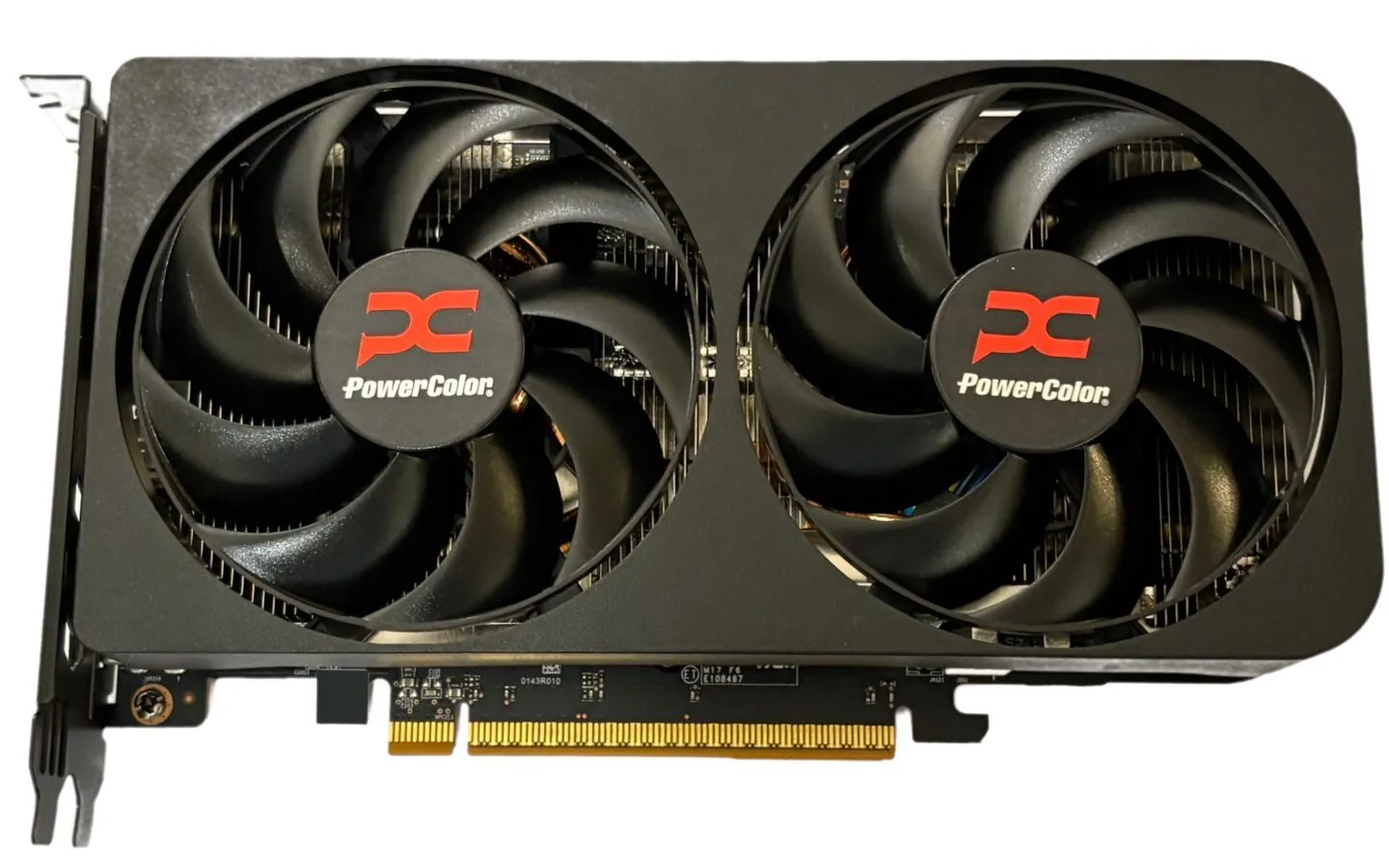
RDNA 4 powers the Radeon RX 9000 series, launched with the RX 9070 and RX 9070 XT on March 6, 2025, and built on a 4 nm process. AMD’s RDNA 4 announcement emphasized redesigned third-generation ray tracing accelerators and second-generation AI accelerators, along with FSR 4, AMD’s first machine-learning upscaler built specifically for those AI cores. The generation was positioned largely in the mainstream and midrange rather than competing for the absolute top, a deliberate strategy.
The RX 9000 numbering surprised some buyers, and there is a reason for it. AMD jumped the line from RX 7000 to RX 9000 to align with its Ryzen 9000 processor branding, and reset the model numbers (such as RX 9070) to line up card by card against Nvidia’s RTX 50 positioning, so an RX 9070 sits opposite an RTX 5070.
What RDNA means for a buyer
For most buyers, the architecture name matters less than the series number on the box, but it explains what you are paying for. An RX 9000 series card gets you RDNA 4’s better ray tracing and its newer AI accelerators, which is why it runs FSR 4, AMD’s machine-learning upscaler, and why it tends to be the better pick if you care about ray tracing or upscaling. An older RX 7000 or RX 6000 card still runs the same games, just with less capable ray tracing and older upscaling, which in the used market can still make a prior-generation card with more memory the smarter buy, as our RX 9050 review details. If you want the short version of which current cards pair well with a given CPU, our best GPU guide for the Ryzen 5 5600 family walks through the buying tiers, and the budget tier overall is covered in our Best Budget GPU 2026 guide.
RDNA vs Nvidia Ada and Blackwell
At the architecture level, the two camps made different bets. Nvidia keeps dedicated RT cores for ray tracing and tensor cores for AI on its Ada Lovelace (RTX 40) and Blackwell (RTX 50) cards, and leans on DLSS as its software differentiator. AMD, by contrast, leaned on chiplets and a large Infinity Cache for bandwidth and efficiency, and kept AI work inside the compute units until RDNA 3 and RDNA 4. There is no single right answer, and the explainer above is meant to be read as architecture, not as a benchmark verdict. For the processor-side naming maze of CPUs, GPUs, and NPUs, our NPU vs GPU vs CPU explainer covers the sibling problem.
How to read a Radeon RX generation number
A quick rule of thumb: the RX 5000, 6000, 7000 and 9000 series map to RDNA 1, 2, 3 and 4. The jump from 7000 to 9000, skipping an 8000 tier, was a branding alignment with the Ryzen 9000 line. When AMD launches a new Radeon generation, the architecture name and the RX series number move together.
This is an evergreen explainer. As AMD ships new RDNA generations, this page will be updated with a new section covering them, so check back when the next Radeon family lands.