NVIDIA is using IFA 2026 to push local AI beyond a single model launcher, combining faster inference, simpler agent setup, networked PC capacity, and new RTX Spark systems. The company outlined the package in its official IFA announcement on September 3.
The announcement covers software that is available now as well as hardware and integrations arriving later. NVIDIA says simplified local support for its GPUs is coming to Hermes Agent, OpenClaw, and Perplexity Portable Computer. It also reports up to 1.9 times higher local inference throughput from new llama.cpp and vLLM optimizations, with the gains available through those backends and through applications including LM Studio and Ollama.
Local agents get a simpler path to the GPU
Running a capable local agent has traditionally required several separate decisions: choose a model, find a compatible server, select a quantization, tune the context and batch settings, and keep the stack updated. NVIDIA says the new setup experiences are intended to remove much of that configuration work on RTX and DGX systems.
Perplexity’s Portable Computer is one example. NVIDIA says the application runs on Linux systems such as DGX Spark today, with Windows support coming soon, and can keep complete workflows local without using cloud credits. It can also escalate selected work to more than 15 frontier models in the cloud when extra research or reasoning is needed, asking permission before sending content away. Those are product claims from NVIDIA’s announcement, not a guarantee that every workflow will remain local or perform the same way on every GPU.
Our coverage of the own-your-hardware case for local models looked at why memory, software support, and privacy matter alongside raw accelerator speed. The IFA package targets that same friction from the software side. More automation at setup can make local AI approachable, but it also makes the supported hardware and application boundaries more important to understand.
PAIR turns spare PCs into a local inference pool
NVIDIA’s Personal AI Router, or PAIR, is a free open-source tool designed to distribute independent inference requests across compatible computers on a local network. The company says PAIR works with Ollama and LM Studio, discovers available PCs, routes work toward systems with capacity, and adapts as devices join or leave the network.
NVIDIA says the beta supports Windows, macOS, and Linux, along with GeForce RTX 20 Series GPUs and newer, RTX PRO workstation GPUs based on Turing or newer architectures, DGX Spark, and Apple M4 or newer silicon. That device list makes PAIR more than a single-vendor desktop feature, although the inference applications and model runtimes still determine what a real workflow can use.
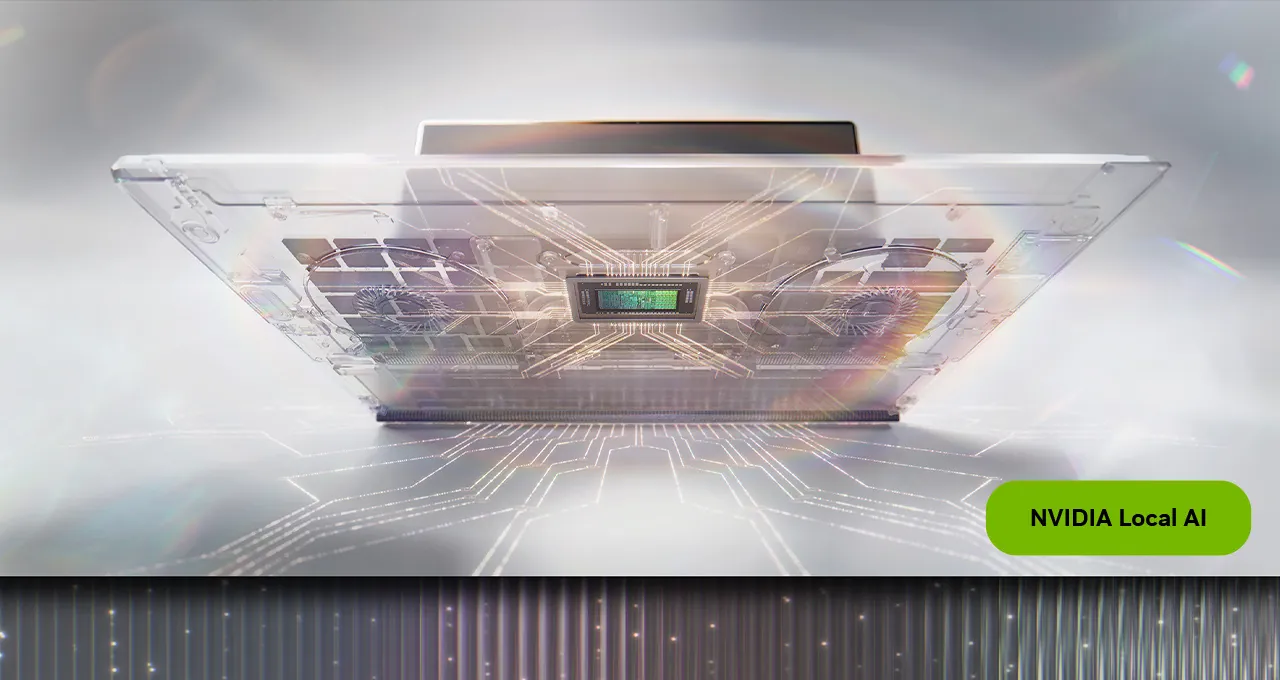
The company is also positioning RTX Spark as the hardware endpoint for this local-agent push. NVIDIA says new Windows PCs from Lenovo and Acer will arrive in October. It describes RTX Spark as a system with a 1 petaflop RTX Blackwell GPU, up to 128GB of unified memory, and a 20-core Grace CPU. NVIDIA says those resources are intended to support creators, gamers, and agents in compact systems, while a Windows Agent framework provides operating-system-level controls for background work.
That memory-first design connects with our explainer on how NPUs differ from GPUs and CPUs, although RTX Spark is aimed at much heavier workloads than the lightweight tasks typically assigned to an NPU. The practical test will be whether the setup tools, runtimes, and network routing make local agents responsive without turning the desktop into a maintenance project. NVIDIA’s October hardware launch and the PAIR beta should provide the first clearer evidence.