Quick answer: the Ryzen 7 7800X3D is fast enough to feed almost any modern graphics card, so your choice is really about resolution and budget. For most buyers that means an RX 9070 XT-class card at 1440p, an RTX 5070 for high-refresh 1440p with DLSS, or a value RX 9060 XT 16GB pairing, with flagship RTX 5080/5090 options reserved for 4K builds.
Best GPU for Ryzen 7 7800X3D at a glance
| Resolution goal | Pick | US price checked Aug 25, 2026 (Newegg) |
|---|---|---|
| 1440p high refresh, AMD build | RX 9070 XT 16GB | from $719.99 (ASRock Challenger) |
| 1440p high refresh, DLSS and ray tracing | GeForce RTX 5070 12GB | $799.99 (GIGABYTE WindForce OC) |
| Balanced value at 1440p | RX 9060 XT 16GB | about $469.99 (per our earlier verified listing) |
| 4K-ready headroom | RTX 5070 Ti 16GB or RX 9070 XT class and up | RTX 5070 Ti listings currently well above MSRP; treat as its own check |
Why the CPU rarely limits this card choice
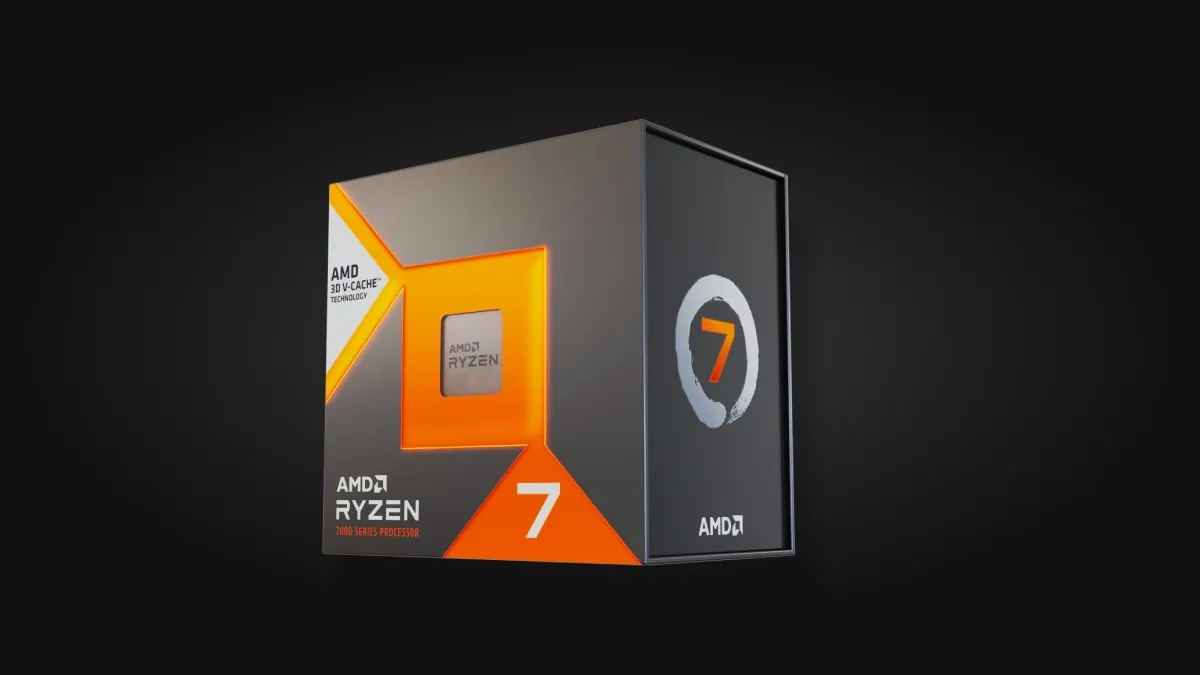
The 7800X3D stacks 96MB of 3D V-Cache on eight Zen 4 cores, which keeps frame delivery high in the simulation-heavy games that usually expose processors. In practice it can feed a top-tier GPU without becoming the bottleneck in most titles at 1440p. That shifts the decision to image quality targets: how much you want to spend on VRAM, ray tracing support, and upscaling ecosystems rather than worrying about wasted CPU potential.
Our picks explained
Best overall: Radeon RX 9070 XT 16GB. The 16GB of memory handles current and upcoming games comfortably at 1440p, RDNA 4 brings better ray tracing than previous generations, and AMD’s FSR support is broad. Verified Newegg listings on August 25, 2026 put the cheapest new cards from major sellers at $719.99 to about $789.99, which undercuts comparable NVIDIA stock.
Best NVIDIA alternative: GeForce RTX 5070 12GB. If you prefer Nvidia’s DLSS 4 ecosystem or play ray-traced titles, verified Newegg listings show the GIGABYTE WindForce OC at $799.99 shipped by Newegg. The 12GB of memory is the trade-off against AMD’s 16GB cards, so heavy texture mods or 4K ambitions argue for the RX 9070 XT instead.
Value pairing: RX 9060 XT 16GB. At roughly $470 per our earlier verified listing, it leaves budget for a better monitor or storage while still delivering strong 1440p performance. Pairing it with the 7800X3D makes sense when you already own the CPU or found it discounted after the 9800X3D launch.
Matching the card to how you actually play
Resolution is only half the decision. Competitive players chasing 240Hz at reduced settings should prioritize raw raster speed and can save money versus cinematic buyers. Single-player fans who max settings and enable ray tracing benefit from Nvidia’s current DLSS advantage at this tier, which narrows the practical gap between the RTX 5070 and AMD’s higher raw throughput. Creators who game get a third axis: NVIDIA’s encoder ecosystem remains the default for streaming, while AMD’s cards counter with more VRAM for GPU-accelerated editing and local AI tools.
Power and chassis constraints matter too. The RX 9070 XT class typically wants a quality 700W-class power supply and a case with real airflow, while the RX 9060 XT runs happily on more modest builds. Measure your case before buying either; the triple-fan models that dominate current listings are long cards.
When to keep waiting instead of buying
Two situations argue for patience. If you are coming from an RTX 3070 or RX 6800-class card and play at 1440p, the uplift from these picks is real but not transformative; waiting a generation or watching for sales may serve you better. And if your monitor is still 1080p, no GPU on this page makes sense yet: a display upgrade changes your experience more than any of these cards will.
What we have not priced here
Flagship pairings such as the RTX 5080 and RTX 5090 remain valid with this CPU, but their prices move too frequently for a static figure to stay honest. Treat any number you see as its own listing to verify on purchase day. The same applies to the RTX 5070 Ti: current listings sit well above launch pricing, so we note it as a category rather than quoting a stale figure.
How this fits the rest of the lineup
This page extends our Ryzen GPU matching guide, which covers the Ryzen 5 5600 and 5600G AM4 builds plus the Ryzen 5 7600. If you are still deciding between cache-equipped and standard chips, our X3D vs non-X3D explainer breaks down what the extra cache actually changes. And if budget is the driving constraint, start from the Best Budget GPU 2026 guide before working up to these higher tiers.
All dollar figures are USD from US listings, checked August 25, 2026, and linked to seller pages. Prices move; verify before checkout.