Qualcomm and Amazon are building a multi-generation line of customized silicon for large AI data centers, with the first announced focus on inference rather than model training. The companies disclosed the collaboration on September 8 in Qualcomm’s announcement, which also covers optical connectivity for the networks linking AI systems.
The release does not name a chip, product family, launch customer, or delivery date. It does say that Qualcomm and Amazon will work across multiple generations of customized silicon to support AWS infrastructure, while optical solutions will extend to speeds of up to 1.6 terabits per second. That makes the announcement a platform commitment, not a product launch with a public benchmark sheet.
The silicon deal is also a networking deal
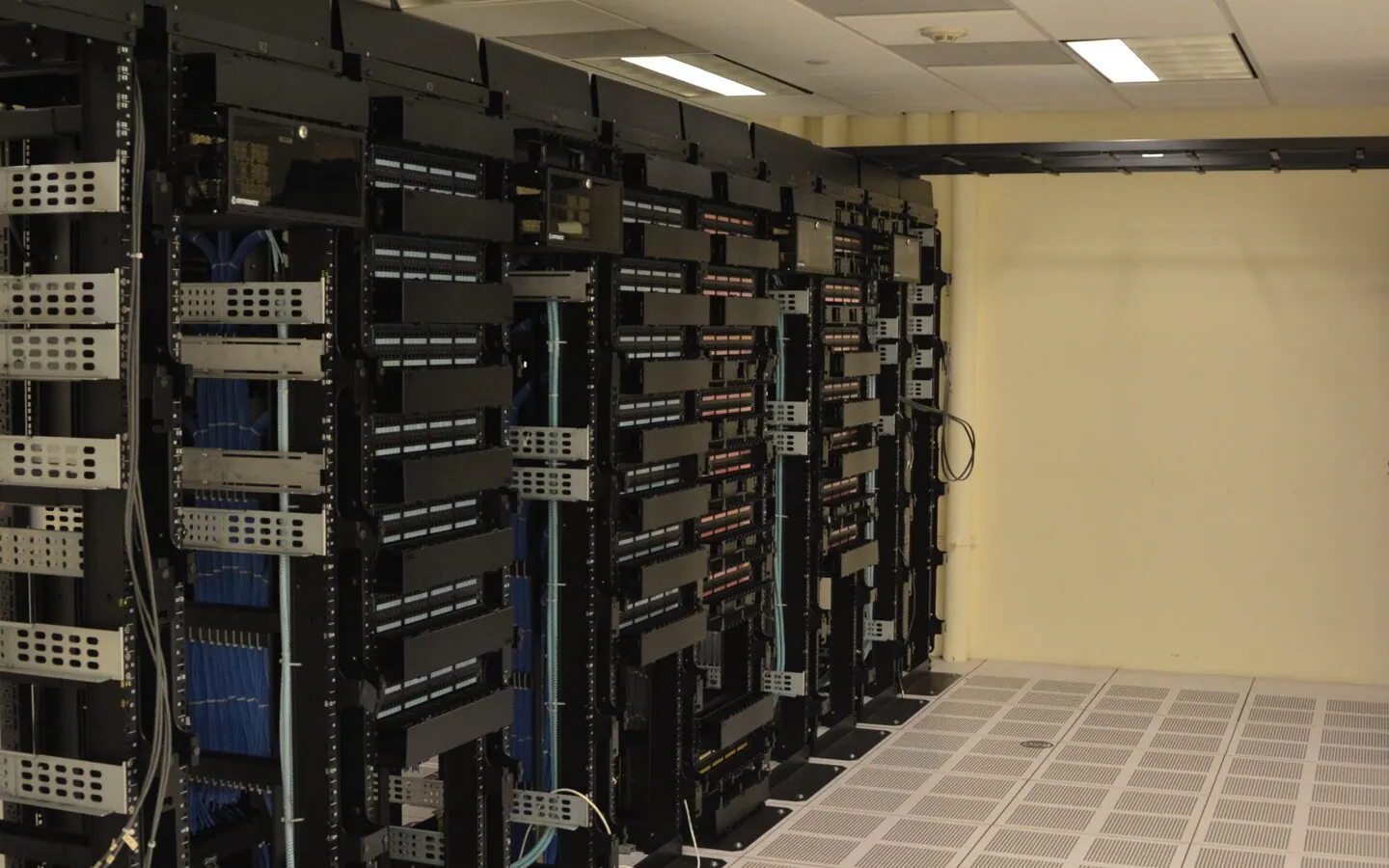
Qualcomm says the optical work will use its SerDes and optical digital signal processor technology. SerDes blocks serialize and deserialize data moving between components, while optical DSPs help prepare high-speed signals for transmission over fiber. In an AI data center, those links matter because accelerators spend their time exchanging model data, activations, and storage traffic as well as doing arithmetic.
That focus connects the agreement to a problem we have covered in our memory bandwidth analysis: faster compute does not automatically make an AI system faster when data cannot reach the processor quickly enough. Optical links do not solve every memory or software bottleneck, but they show why the infrastructure race is spreading beyond the accelerator itself.
The companies also plan to deepen Qualcomm’s use of AWS infrastructure, including Amazon Bedrock, for electronic design automation workloads. Qualcomm says the goal is to reduce chip design cycles. That is a claim about the design process, not a promise that the resulting chips will reach a specific performance-per-watt target, so the practical result will depend on future products and published measurements.
For Amazon, the collaboration adds another source of customized silicon for AWS data centers. Amazon already develops its own cloud processors, but this announcement does not say which workloads will move to Qualcomm designs or how the parts will sit alongside existing AWS hardware. The useful detail for customers is narrower: the two companies are planning several generations of inference silicon and high-bandwidth connectivity rather than a one-off accelerator. It is a supply and systems decision whose customer-facing shape will emerge later.
For Qualcomm, the agreement creates a route deeper into data-center infrastructure at a time when inference demand is pushing cloud operators to examine power, memory movement, and networking together. The company has experience building low-power processors and connectivity products, but a data-center deployment still has to meet AWS requirements for software, reliability, supply, and system integration.
The announcement leaves the most important buying questions open. Qualcomm and Amazon have not published model names, core counts, memory configurations, customer availability, pricing, or independent performance results. Readers looking at the hardware layer can use our TPU versus GPU explainer for the broader accelerator context, but this partnership is still at the collaboration stage. The next meaningful milestone will be a named product, a deployment date, or measured results from an AWS system.