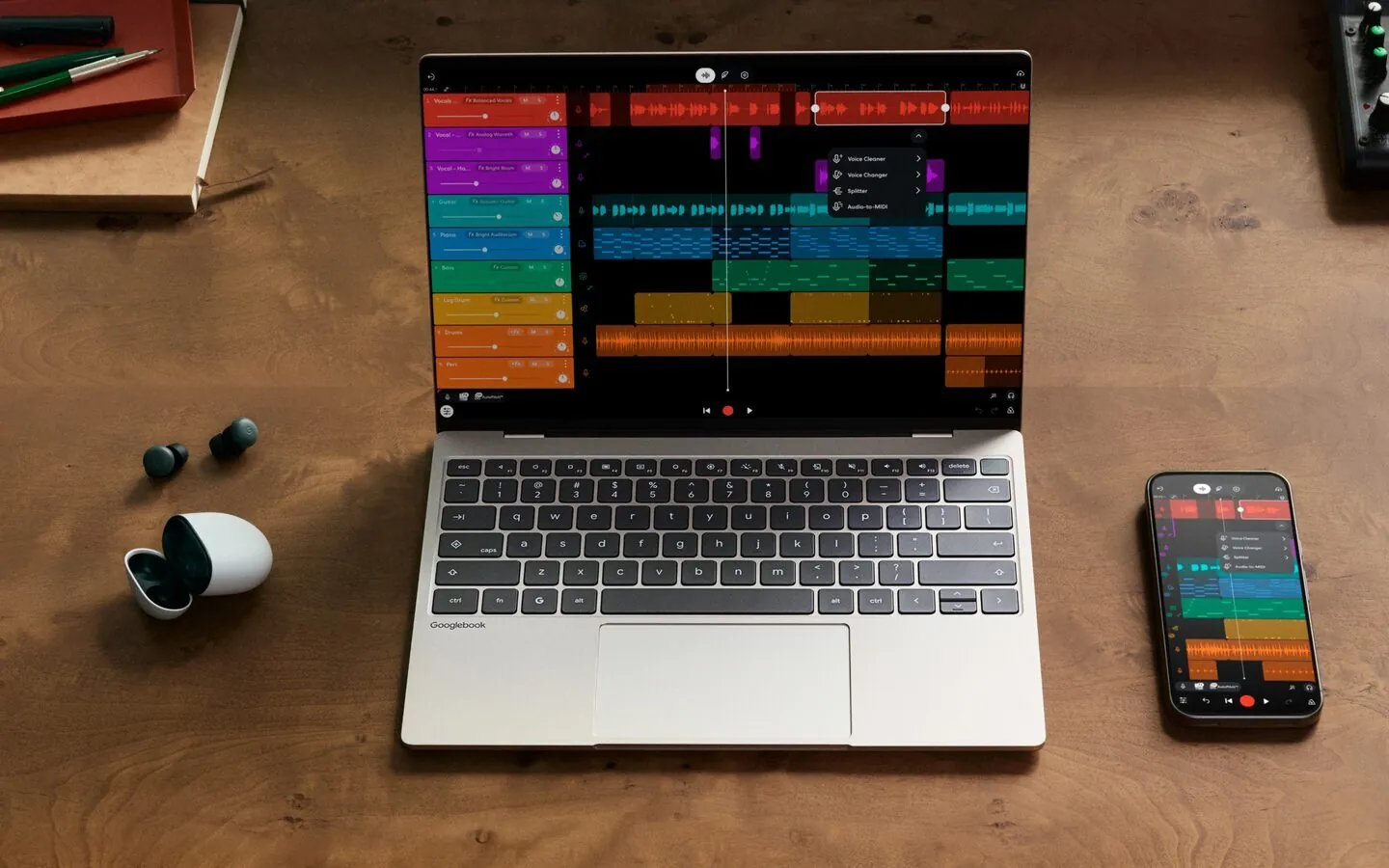
Googlebook preorders are now open for the first wave of laptops built around Google’s Gemini Intelligence push. The official Googlebook site currently shows a “Pre-order now” path, describes the machines as a new flagship laptop category, and says they are coming in fall 2026.
The launch is less about one reference computer than a new hardware label for Google’s desktop ambitions. The official Android Show I/O page describes Googlebook as premium hardware with Gemini at its core, while the product site names Acer, Asus, Dell, HP and Lenovo as the manufacturers in the first wave. Google has not published a single Google-built model, a universal specification sheet, or a price on the pages currently available.
Googlebook makes the laptop a Gemini surface
The product pitch is built around a group of features that sit closer to the operating system than a conventional chatbot tab. Magic Pointer is presented as a way to select something on screen and ask Gemini to compare, explain or create with it. Create My Widget is described as a way to build a custom widget by asking for one. The site also highlights Cast My Apps, which opens phone apps on the laptop without an installation step, and Quick Access, which makes files from a phone available as if they were stored on the computer.
Those examples reveal what Google is trying to sell before it has shown the full device lineup. The attraction is not only a faster processor or a thinner chassis. It is a laptop that treats the phone, the desktop and the assistant as one connected surface. That is a familiar ambition in premium computing, but Googlebook gives it a distinct name and puts Gemini in the first sentence of the hardware story.
The hardware language remains deliberately broad. Googlebook’s own explanation calls the category a combination of ChromeOS and Android strengths, with premium materials, powerful performance and Android phone connectivity. Google’s developer documentation frames it as the next step in adaptive Android development, with enhanced multitasking and new input methods for a larger screen. Neither source turns that positioning into confirmed processor models, memory capacities, display specifications or battery figures.
That restraint matters for buyers. Our NPU, GPU and CPU explainer covers why an AI label alone does not describe how a computer will handle local models or everyday work. Until the manufacturers publish their individual configurations, there is no reliable basis for comparing Googlebook devices on compute performance, neural acceleration or thermals.
The open questions are part of the launch
Google’s official page confirms the partner list and the fall window, but it does not yet provide a complete shopping table. Buyers still need prices, regional availability, storage and memory options, processor details, release dates, return terms and a clearer account of which Gemini features require an internet connection or a paid plan. The page’s feature notes also say availability can vary, so the experience may not be identical across every model or market.
That makes the first Googlebook wave a platform launch as much as a product launch. Acer, Asus, Dell, HP and Lenovo will determine how the category looks in practice, from cooling and ports to screens and repairability. The software promise will need to survive those differences. A polished assistant feature is useful only if the laptop has the battery life, input quality and local performance to make it feel immediate.
For readers tracking our local AI hardware guide, Googlebook is an early signal that laptop makers are treating on-device and device-connected intelligence as a defining purchase question. The confirmed news today is narrower: preorders are open, the first machines are due in fall 2026, and five established PC brands are attached to the launch. The important specifications are still waiting for the product pages that come next.