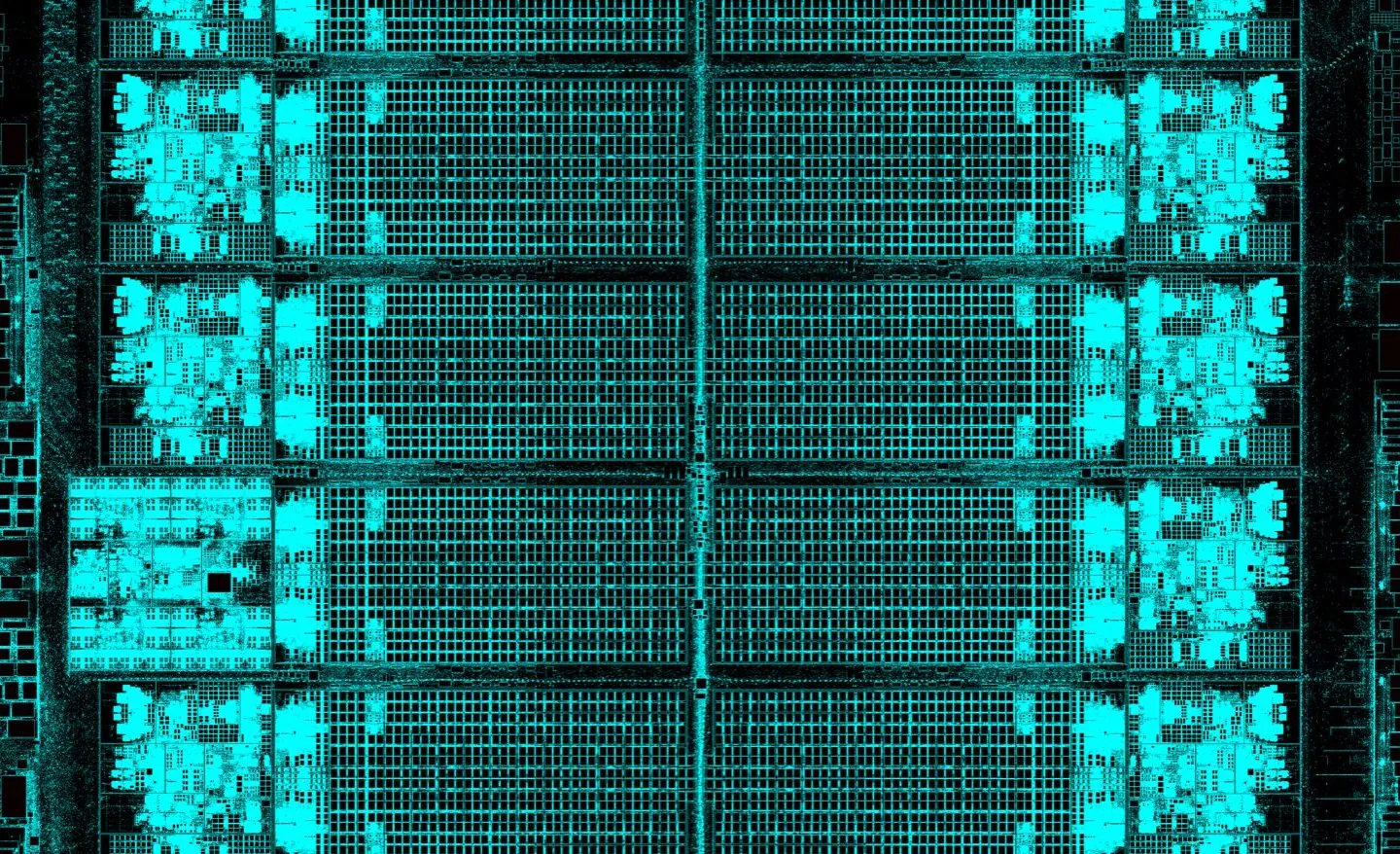
IBM announced the first dual-architecture mainframe processor at the Hot Chips conference on August 24, a design whose cores execute Arm and IBM Z instructions natively on the same silicon in future IBM Z and LinuxONE systems. It is the first processor milestone from the IBM and Arm collaboration established in April 2026, and it is meant to let enterprises run Arm-native Linux environments alongside z/OS and Linux on IBM Z without leaving the platform’s security and reliability envelope behind.
The specification sheet reads like a statement of intent. Built on a 2nm node, the processor carries 11 high-performance cores clocked above 5.7 GHz, AI inference accelerators aimed at in-transaction fraud detection, a dedicated on-chip data processing unit for I/O acceleration, and a large cache architecture for enterprise workloads. IBM is explicit that this is not a heterogeneous package with separate Arm and IBM clusters: every one of the cores can execute Arm and Z, or Arm and LinuxONE, instructions concurrently. Assembled into full systems, the company says the platforms scale to hundreds of cores and tens of terabytes of memory.
One core, two instruction sets
The engineering choice IBM keeps stressing is that each core switches between instruction sets rather than splitting the die into two camps. In an interview with VentureBeat, IBM Fellow and Systems Development CTO Christian Jacobi described cores that flip between Arm mode and Z mode as the open-source KVM hypervisor dispatches virtual machines, with the switch taking on the order of nanoseconds against virtual machines that run for milliseconds, an overhead he characterized as amortizing to zero. Traditional z/OS workloads run in their own partition outside KVM, so a bank’s ledger, its fraud models, and a modern Arm-native monitoring stack would share the same memory fabric and reliability guarantees.
Arm compatibility is also positioned as exact rather than approximate. Jacobi told VentureBeat the Arm capabilities are designed to be fully binary compatible, with Arm defining the ISA and supplying validation tooling while IBM designs the silicon itself. For readers wondering where the inference accelerators fit relative to the rest of the machine, our NPU versus GPU versus CPU explainer covers how dedicated engines trade generality for efficiency.
A software story more than a silicon story
The strategic logic is ecosystem size, not transistor count. IBM’s release leans on Arm’s community of more than 22 million developers building cloud-native and AI software that today targets x86 and Arm64 first, then faces a grinding one-vendor-at-a-time port to the mainframe’s s390x instruction set. Native execution is designed to dissolve much of that porting burden, letting monitoring tools, databases, messaging systems, and AI frameworks run where the transactions already live. IBM frames the payoff in terms of its established platform qualities: hardware-level fault detection and recovery, advanced encryption, secure key management, and AI acceleration extended to Arm workloads.
Timing matters here. This is a roadmap reveal for the system after z17, not shippable hardware, and VentureBeat’s reporting points to roughly a 2028 launch window based on IBM’s three-year cadence, with IBM stating the program is in full development. IBM also previewed the next generation of its Spyre accelerator card at Hot Chips; per the VentureBeat interview it is being positioned to run large language models for agentic workflows with high-bandwidth memory on board, extending the on-chip Telum lineage that handles fraud scoring inside a transaction. Both companies’ releases carry the usual caveat that forward-looking statements represent goals rather than commitments.
For IBM, the move lands amid heavy investment across its AI portfolio, including the enterprise partnership with OpenAI signed earlier this year, and it arrives as specialized data-center silicon keeps multiplying, from Cerebras’ CS-4 wafer-scale system to a fresh wave of inference-focused accelerators. What IBM is adding is narrower and older than any of them: a way for sixty-year-old transaction infrastructure to speak the language most new enterprise software is already written in. The next confirmed checkpoint is more detail ahead of the future Z and LinuxONE generation’s launch.