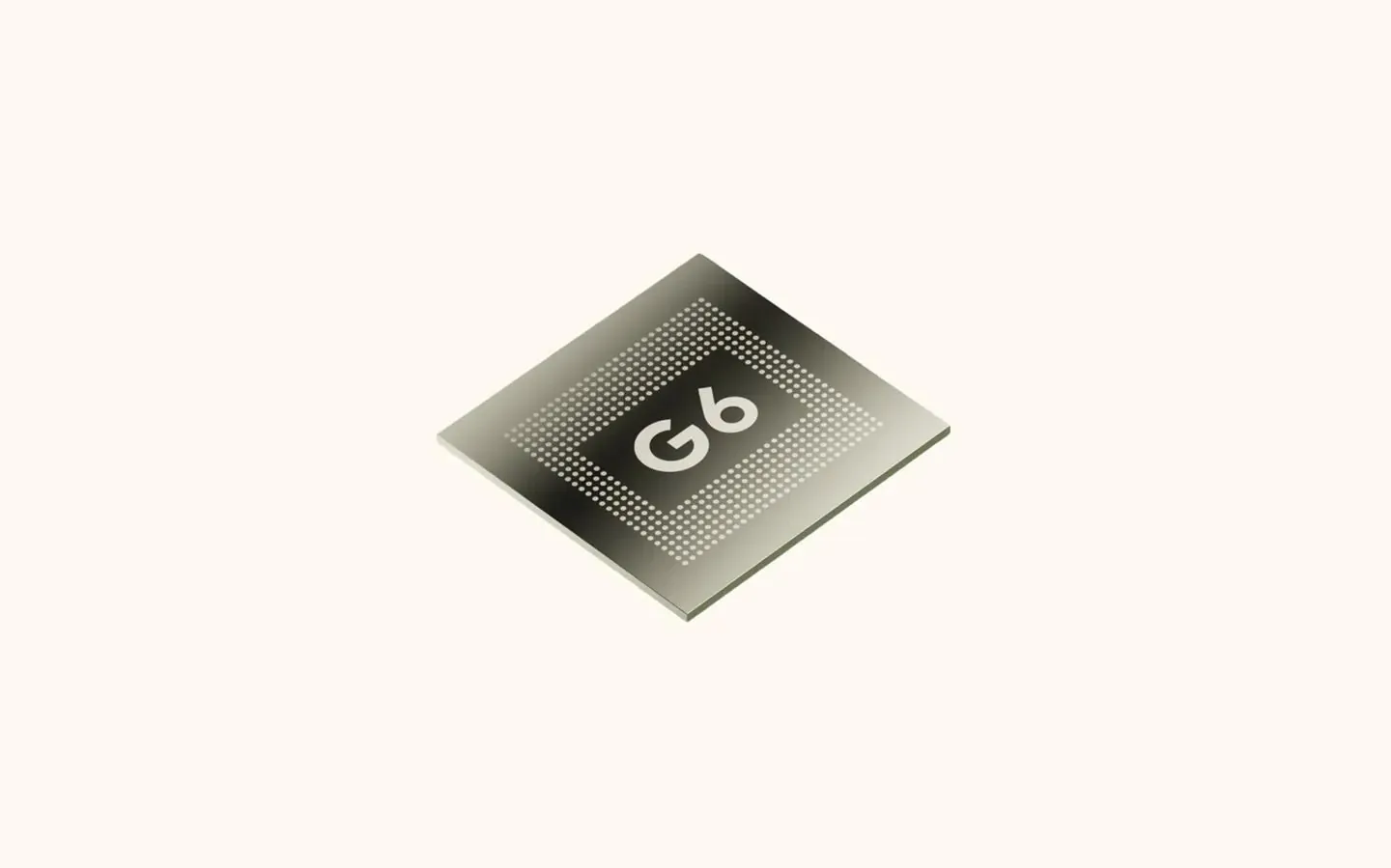
Google unveiled the Pixel 11, Pixel 11 Pro, and Pixel 11 Pro XL on August 12, and the hardware story underneath the phones is the new Google Tensor G6 processor, a custom chip Google says runs the latest Gemini Nano model and processes on-device AI tasks up to 3.5 times faster than its predecessor while using up to 3.5 times less energy. In its launch announcement, Google describes Tensor G6 as its fastest, most powerful chip yet, with 50 percent more TPU compute than the Tensor G5 and an upgraded CPU that delivers 25 percent faster web browsing and 15 percent quicker app launches.
The new silicon is the sixth generation of Google’s in-house Tensor line, which pairs an Arm-based CPU with a Google-designed TPU for on-device AI work. Google said the chip now runs the latest Gemini Nano model, and the phones ship with a new Titan M3 security chip that brings post-quantum cryptography to secure boot. The launch confirms that Google is staying on its custom-silicon path rather than buying off-the-shelf mobile chips, a strategy it has followed since the original Tensor debuted in 2021.
What Tensor G6 adds
The headline numbers are about on-device AI efficiency rather than raw speed. Compared with Tensor G5 at launch, Google says Tensor G6 offers 50 percent more TPU compute, up to 3.5 times faster on-device AI task processing, and up to 3.5 times lower energy use for those tasks, based on internal data from pre-production devices. The CPU upgrades target everyday responsiveness, with the 25 percent faster web browsing and 15 percent faster app launches also measured against the previous generation.
The TPU gains matter for the wider trend we have been tracking: local AI models are rewriting the case for owning your hardware. Running generative models directly on the phone removes the round trip to a cloud API, which is exactly the shift Google is leaning into with Gemini Nano on Tensor silicon. The camera system leans on the chip too: Google said Tensor G6’s upgraded image signal processor helps Night Sight capture up to 4.5 times faster, and the 5x telephoto now supports 30x Super Zoom, with Pro Zoom out to 120x on the Pro models.
On the security side, the new Titan M3 chip integrates with Tensor G6 to protect sensitive data, and Google says the combination brings post-quantum cryptography to secure boot, a response to the risk that quantum computers could eventually break current cryptographic schemes. That is the same long-horizon hardening we noted in our coverage of side-channel defenses on AMD and Intel CPUs, where platform-level security updates are becoming a standard part of silicon roadmaps.
Pricing and availability
All three phones start at 256GB of storage. The Pixel 11 starts at $899, the Pixel 11 Pro at $1,099, and the Pixel 11 Pro XL at $1,299, with pre-orders open from August 12 and retail availability set for August 20 at the Google Store and partner stores. Google also touted faster charging across the lineup, including Qi 2.2 25W compatibility on the Pixel 11 and Pixel 11 Pro, and a claim that the Pro XL can deliver 15 hours of battery life from a 15-minute wired charge.
The Pixel 11 launch lands in a busy season for custom AI silicon in personal devices. Microsoft is reportedly preparing its Maia 300 AI chip for launch as soon as next month, and AMD has been pushing NPUs into its Ryzen lineup. Google’s bet is that a phone-grade TPU plus a post-quantum security chip gives it a differentiated position for on-device AI, and the Tensor G6 specifications are the clearest statement yet of that strategy.