SpaceX is bringing a difficult part of gas-turbine production in-house as Elon Musk looks for more power for AI infrastructure. In an August 29 post on X, Musk said SpaceX and Tesla are pushing solar production but will still need natural gas to bridge the gap. He identified turbine blade and vane casting as the limiting step and said SpaceX’s own casting work could bring turbines online up to 18 months sooner.
The plan is more than a post about energy strategy. TechCrunch reported on August 30 that SpaceX is building a foundry in Bastrop, Texas, after job listings described a blades and vanes foundry. The report connected the project to land SpaceX acquired near its Starlink manufacturing site and to the wider scramble for power at AI data centers.
Why turbine blades are the choke point
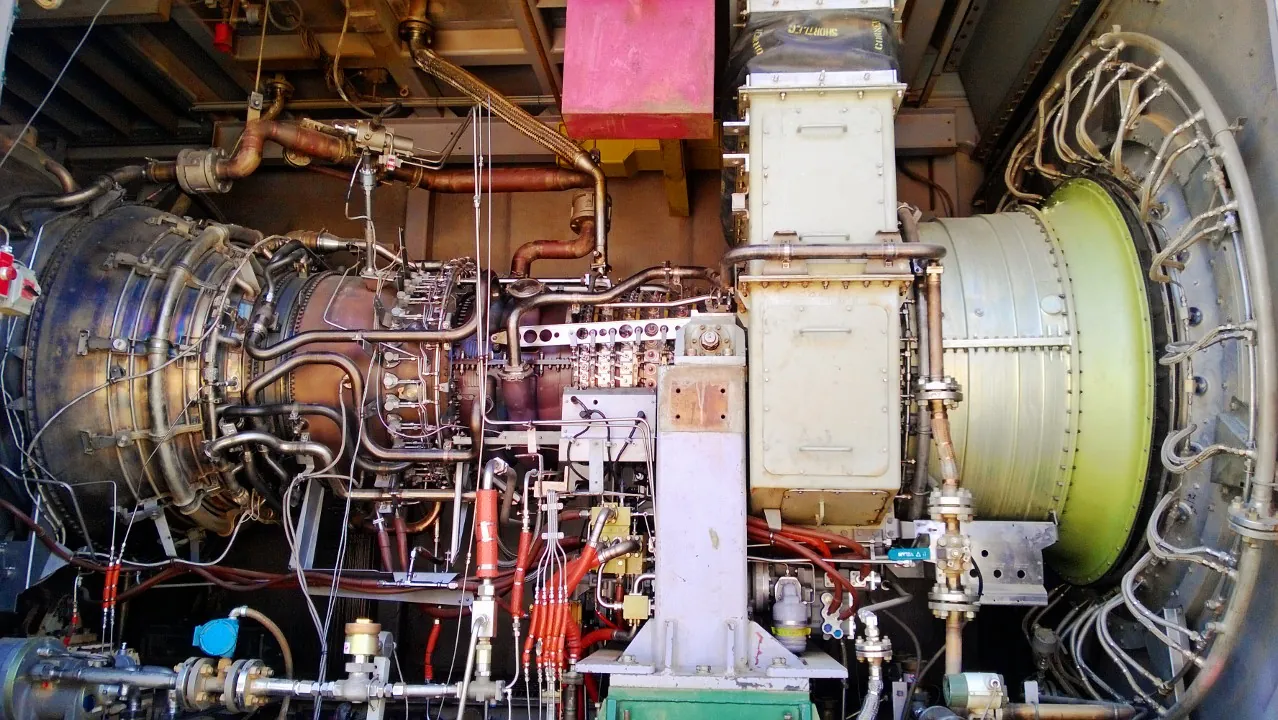
Industrial gas turbines are not held up by every component equally. The blades and vanes in the hottest section must survive temperatures that TechCrunch reported at roughly 3,000 to 3,600 degrees Fahrenheit. That is about 800 degrees hotter than the melting point of the alloy, so the parts depend on internal cooling channels, thermal-barrier coatings, and a highly controlled casting process.
The most demanding versions use single-crystal superalloy structures. A vacuum furnace slowly grows one uninterrupted crystal instead of leaving grain boundaries that can become weak points under heat and stress. The parts are also much larger than the blades used in jet engines, making defect-free production harder. TechCrunch reported that only four companies have mastered this process at industrial scale and that their capacity is already committed.
That constraint changes the shape of the AI infrastructure race. Neon Control has covered how power has become a central limit for new compute, but the bottleneck is not only the electricity available at a site. A data center can have chips, buildings, and a grid connection in progress and still wait for the machinery that turns fuel into reliable generation.
A faster power path with a hard tradeoff
SpaceX’s approach is vertically integrated: make a scarce turbine component itself, then use the resulting equipment to support data centers and other high-power facilities. Musk’s 18-month estimate is a company claim, not a demonstrated delivery schedule. The public information does not establish when the Bastrop foundry will operate, how many parts it will produce, or whether the facility can match established turbine suppliers on quality and volume.
The project also connects SpaceX’s manufacturing base to a power-infrastructure problem created by the expansion of AI compute. That is consistent with the broader hardware shift described in our memory bandwidth coverage: performance depends on the systems around the processor, not just the processor’s headline specifications.
Natural gas can provide power faster than a long wait for new transmission or generation capacity, but it brings emissions and permitting disputes with it. TechCrunch described pollution complaints around SpaceXAI’s Memphis data centers and cited health concerns tied to gas-turbine emissions. More turbine capacity may ease the schedule for AI infrastructure while making the environmental and regulatory cost harder to ignore.
For now, the confirmed development is narrow. Musk has publicly said SpaceX will cast turbine blades and vanes in-house, and reporting has identified a Bastrop foundry project behind that statement. Whether it becomes a durable advantage will depend on construction, qualification, output, and the permits required for the power plants those turbines are meant to serve.