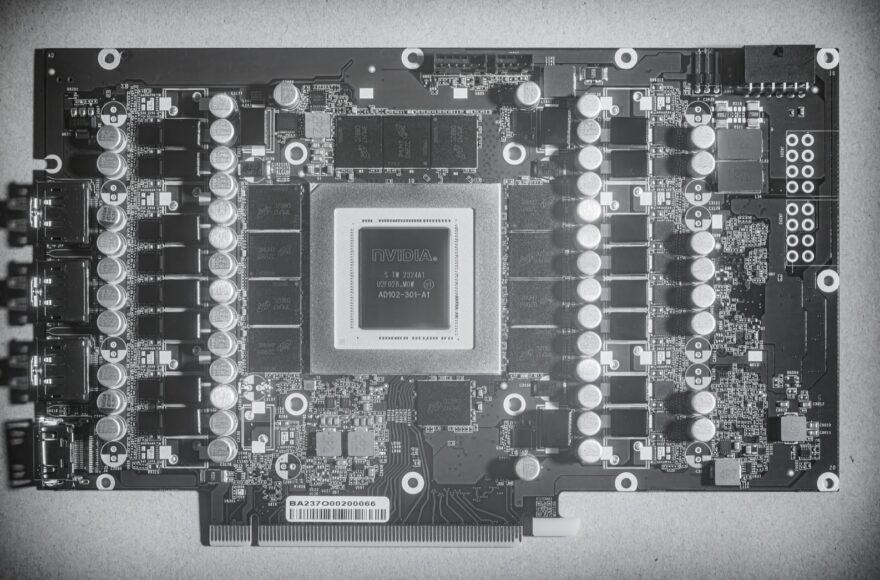
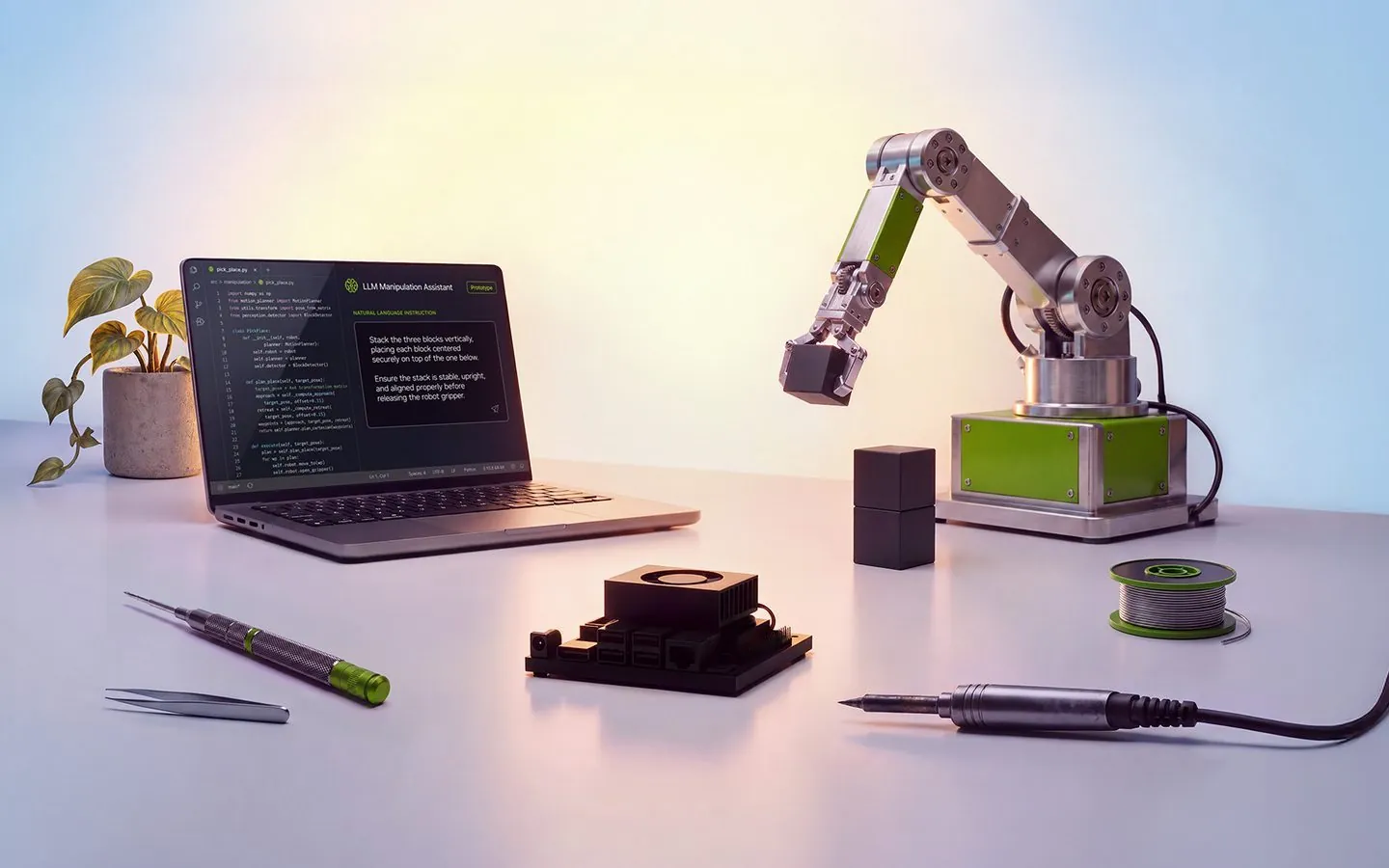
NVIDIA announced Jetson Orin Nano 2, a small robotics computer that brings generative and physical AI to entry level edge devices. The company published the news on August 25 in its NVIDIA Newsroom, positioning the module for delivery and inspection drones, robots, and vision AI systems.
The headline claim is efficiency. NVIDIA says Jetson Orin Nano 2 delivers twice the inference performance of its predecessor, the Jetson Orin Nano Super, in the same compact form factor, while consuming 40 percent less power at equivalent performance. The module is built around updated Tensor Cores and higher memory bandwidth, and it is expected to reach the market in the first half of 2027 as both a module and a developer kit.
What the module carries
NVIDIA lists the hardware as 78 trillion operations per second of AI compute, 8 GB of LPDDR5x memory, and an 8 core Arm CPU. Those numbers place it in the same entry level class as the Orin Nano line it replaces, but the company says the jump comes from revised Tensor Cores and a wider memory path rather than a larger chip. The design goal is real time reasoning at the edge: running language and vision models locally on a robot or drone, without a round trip to a data center, so the machine can act on its surroundings even when connectivity drops.
Memory is the usual constraint for edge AI, and the 8 GB figure is the same wall we examined in our piece on memory bandwidth as the new bottleneck in AI hardware. Larger models either will not fit or will spill to slower storage, which is why NVIDIA names its own Cosmos and Nemotron models alongside Gemma 4 and Qwen 3 as examples that fit this class of hardware.
The module runs on NVIDIA’s standard Jetson software stack, including Jetson agent skills and the wider edge AI tooling, so teams with existing robotics code can move to the newer hardware without rewriting from scratch.
Where it lands
NVIDIA says more than three million developers build on its robotics stack, and it named partners already evaluating the new module, including Cognex, Doosan Bobcat, Matic, and Wing. Matic is exploring it for home cleaning robots, while Wing is looking at more responsive, energy efficient delivery drones. A long roster of carrier board and system makers, from AAEON and Advantech to Seeed Studio and AVerMedia, is building around the platform.
NVIDIA said, quoting Deepu Talla, vice president of robotics and edge AI, that “Frontier intelligence has reached the edge. Frontier models that used to run inside data centers last year can now run in real time on entry-level Jetson systems.” As we noted in our NPU vs GPU vs CPU comparison, the engine that matters at the edge is the one that balances compute, memory, and watts for the specific workload, not the one with the highest peak. Jetson Orin Nano 2 is NVIDIA’s argument that the entry level tier can now run the models that, a year ago, lived only in data centers, with availability timed for the first half of 2027.