AI accelerators are hitting a wall that has nothing to do with how fast they can multiply numbers. The limit is now how fast they can feed themselves data, and the memory standards bodies that define how that data moves have become a quiet center of the hardware race.
A model does not just need compute. Every weight it touches has to travel from memory into the processor, and the larger the model, the more that journey dominates the total time. When a training run or an inference request spends most of its time waiting on memory, adding more compute to the chip does almost nothing. The accelerator is no longer the bottleneck. The pipe into it is.
Why memory became the constraint
The shift happened because model sizes grew faster than memory speed. Engineers could keep shrinking process nodes and packing in more arithmetic units, but the physical task of moving billions of bytes on and off the die could not scale at the same rate. The result is a generation of chips that are compute-rich and bandwidth-poor, with utilization numbers that look modest not because the hardware is weak but because it is starved.
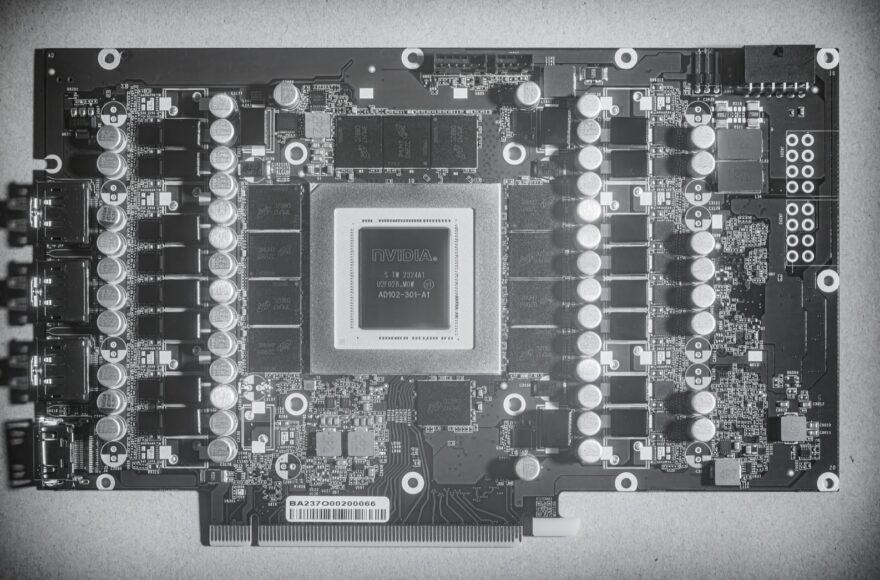
The industry answer is a more intimate pairing of processor and memory. High bandwidth memory sits close to the accelerator, stacked in tight layers, so the trip a weight makes is short and wide rather than long and narrow. The engineering is now about the packaging, the interconnects, and the careful budgeting of every gigabyte per second, as much as it is about the arithmetic units themselves.
Software is adapting too. Quantization shrinks the bytes a model needs to move, and smarter scheduling keeps frequently used weights resident in the fastest tier. The most efficient systems treat memory as a resource to be managed, not a given. That is why two systems with the same processor can perform so differently in practice.
The practical consequence for buyers is a new spec sheet. Raw compute still matters, but memory capacity, memory bandwidth, and how the two scale together are now the numbers that separate a capable system from a stranded one. A machine that can keep its model resident and stream weights quickly will stay useful far longer than one with a headline compute number and a thin memory pipe.
None of this means the compute race is over. It means the race has a second lap, and the winner will be the system that balances both. For anyone choosing hardware for AI, the useful question is no longer just how many operations a chip can do. It is how much data it can actually feed itself, and how gracefully it behaves when that limit is the one that matters.