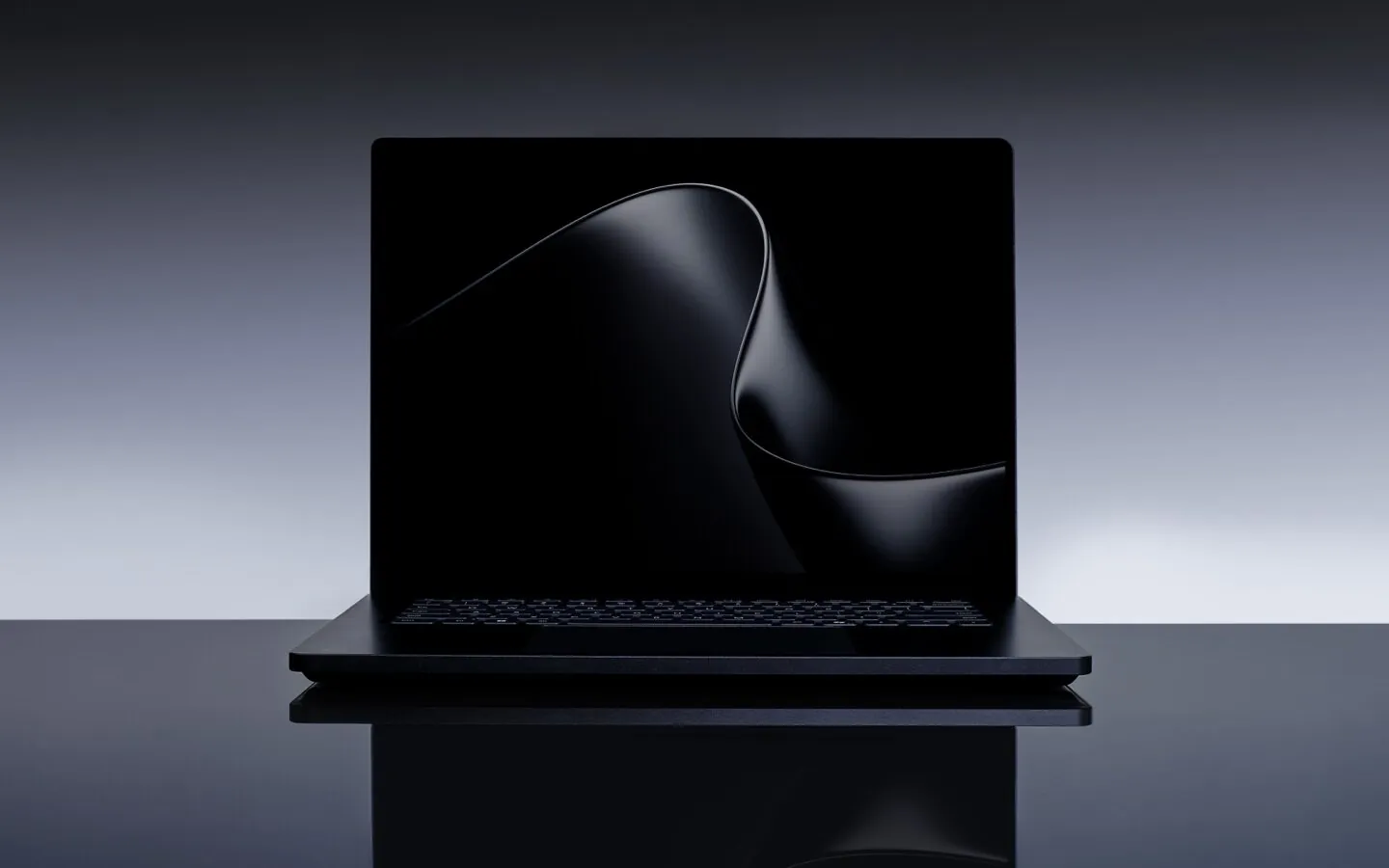
NVIDIA says RTX Spark laptops are now available globally from ASUS, Dell, HP, Lenovo, Microsoft and MSI, with more systems to follow. Its October 16 availability announcement lists the launch lineup and says configurations vary by region. For buyers, the key questions are how much memory each SKU includes and whether the software they depend on runs natively or through emulation.
RTX Spark is not simply a GeForce graphics card added to an existing Intel or AMD laptop. It combines a Blackwell RTX GPU with a Grace CPU in an integrated platform. NVIDIA’s specification table lists two N1X laptop configurations: one with 6,144 GPU cores, 20 CPU cores and up to 128GB of LPDDR5X unified memory; another with 5,120 GPU cores, 18 CPU cores and up to 64GB. The same RTX Spark name therefore does not guarantee the same configuration.
NVIDIA’s launch lineup includes ASUS ProArt P14 and P16, Dell XPS 16, HP OmniBook Ultra and OmniBook X 14, Lenovo Yoga Pro 9n, Microsoft Surface Laptop Ultra, and MSI Prestige N16 Flip AI+ and Prestige N16. That gives buyers a starting list, not a promise that each configuration is stocked in every market; check the local seller for installed memory, delivery, and software configuration.
Unified memory still needs a working budget
The appeal for local AI is a shared memory pool instead of a separate, smaller GPU allocation. Microsoft’s earlier platform explanation describes Windows changes that increase the memory accessible to the GPU on high-memory systems. That is useful context, but it does not mean every byte of a 128GB laptop is available for model weights.
Consider an illustrative 70-billion-parameter model stored at four bits per parameter. Multiplying 70 billion by four and dividing by eight gives 35GB of raw weight data, before packing metadata, runtime allocations, context cache, Windows and other applications. This is arithmetic, not a benchmark or a claim that a particular model will run successfully. Longer conversations and concurrent work need additional headroom.
Start with the actual checkpoint and quantization you intend to use, then reserve memory for the rest of the workload. Our local-AI hardware fit tool explains these estimates and their limitations; it does not certify RTX Spark software support or predict speed.
NVIDIA advertises up to one petaflop of FP4 AI compute. That peak figure is not a tokens-per-second result, and FP4 hardware support does not establish that every four-bit model format uses the same execution path. Look for tests naming the model, runtime, precision and context length, with results on both mains power and battery. We have not tested these laptops.
Check the software, not just the RTX badge
The Grace CPU uses Arm architecture. Microsoft says Prism is optimized for RTX Spark to run x86 and x64 applications, but emulation is not a blanket compatibility guarantee. Its Windows on Arm documentation distinguishes application emulation from drivers: kernel-mode drivers must be native Arm64 binaries.
Before ordering, check the specific versions of your AI runtime, creative applications, plugins and peripherals. NVIDIA says Adobe Photoshop and Premiere offer native RTX Spark support through beta releases available at launch, while Substance is coming soon. For games, verify the title’s current Arm support and any anti-cheat requirements. A supported graphics feature is not proof that every game or dependency will work.
RTX Spark laptops are separate from NVIDIA’s DGX Spark workstation. The laptop line is now on sale, but platform-level memory and compute ceilings do not confirm a specific model’s software support or speed. We have not tested these machines, so verify an exact SKU and wait for workload-specific testing before treating model capacity as a performance promise.