Google and Cathay Pacific are expanding an AI trial that helps aircraft avoid the atmospheric conditions that create warming contrails. The partnership, described in Google Research’s September 7 announcement, is the company’s first commercial airline contrail-avoidance partnership in Asia and focuses on ultra-long-haul flights.
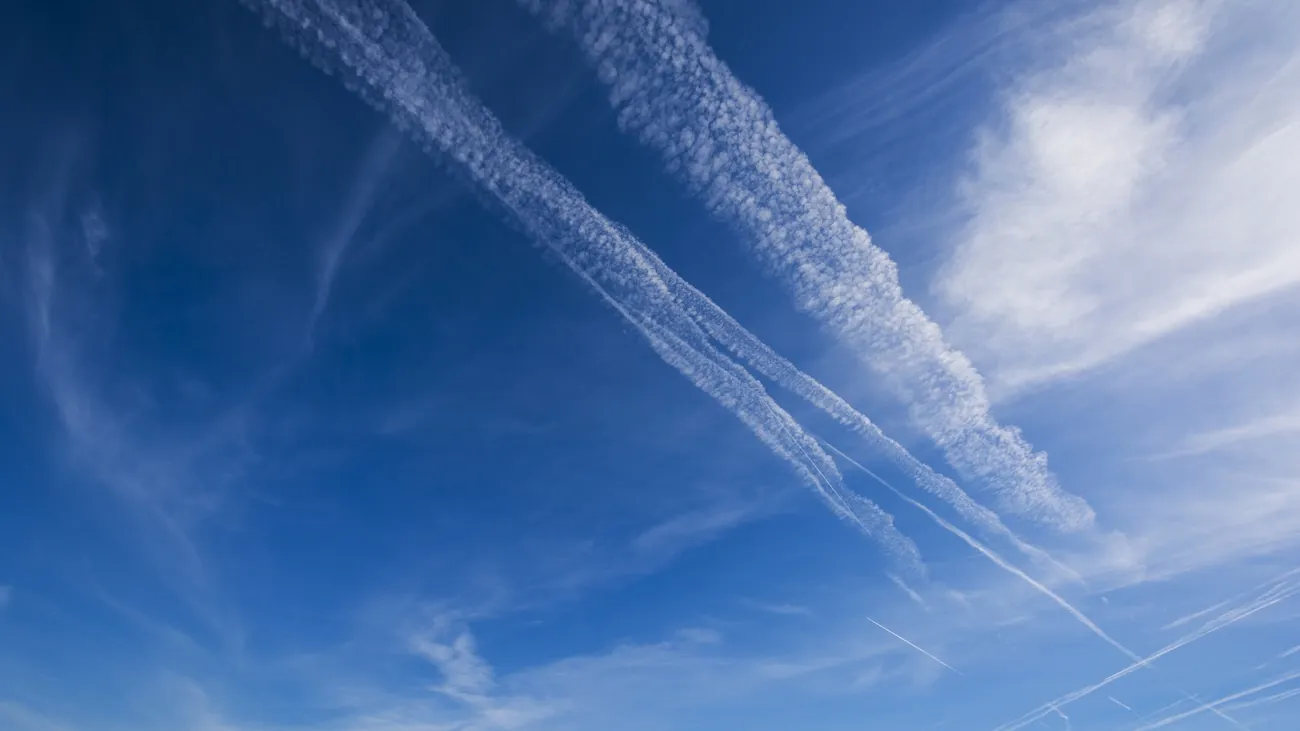
Contrails form when water vapor freezes around particles in cold, humid air behind an aircraft. Many disappear quickly, but some spread into cirrus-like clouds that trap heat. Google says contrails account for roughly one-third of aviation’s total climate impact, a company estimate that frames the trial as a climate experiment rather than a change to the aircraft itself.
From satellite signals to the flight deck
The system combines AI predictions, satellite imagery, and weather intelligence to identify areas where persistent contrails are likely to form. Dispatchers and pilots can then consider a small altitude adjustment to route around those zones. Cathay connects the forecasts to its flight deck through in-flight Wi-Fi and its proprietary Electronic Flight Folder, giving crews another operational signal alongside the information they already use.
That workflow matters because the proposal does not require new engines or a new fuel. It asks airlines to use a forecast to make a limited routing decision before or during a flight. Google’s Project Contrails research page describes the broader method as a combination of weather, satellite, and flight data, with computer vision used to detect contrails and attribute them to aircraft.
The Asia-Pacific trial builds on earlier work with American Airlines in the United States and on routes across the North Atlantic. Google says the new partnership extends that research into a region where long-distance flights cross conditions that can support persistent contrails, while also adding data from an operating environment that has been less represented in previous trials.
A larger trial across Asia-Pacific
Google says the initial operational trial targeted more than 100 flights across Cathay Pacific’s network. More than 80 flights followed contrail-avoidance routes, and Google’s satellite analysis estimated roughly a 40 percent reduction in the warming impact of the contrails those flights would otherwise have produced. Those numbers are estimates from Google’s analysis, not an independent certification of the climate effect.
The Hong Kong to Singapore corridor was among the routes tested. Google says interventions on that route accounted for more than half of the trial’s total emissions reductions. The company is now scaling the partnership into a second phase of flights across Asia and transpacific routes, while working with Contrails.org to contribute data to wider contrail research.
There is a practical tradeoff behind the idea. A flight that changes altitude can burn more fuel, and the climate benefit depends on avoiding a contrail that would have persisted long enough to create a meaningful warming effect. The system therefore has to be selective. A forecast that sends every aircraft around every possible contrail would create a different emissions problem, while a forecast that is too cautious would miss the opportunity.
That makes the new trial useful as an engineering test as much as an environmental project. It will show whether predictions can arrive early enough, whether crews can use them without disrupting normal operations, and whether the estimated benefit holds across different routes and weather patterns. Our coverage of AI’s growing energy footprint looked at the hardware side of climate pressure. Google’s contrail work points to another layer, where better forecasts could change how existing machines are operated.
Google says the trial is intended to build a broader evidence base for contrail avoidance with today’s aircraft and fuel. The next confirmed step is the larger flight program with Cathay Pacific, not a promise of immediate fleet-wide deployment. Its value will depend on results that can be measured, repeated, and compared with the extra fuel and operational work required to obtain them.