
Intel used Hot Chips 2026 to lay out a three part strategy for agentic AI, detailing the Diamond Rapids Xeon processor, the Crescent Island inference GPU, and the Wildcat Lake Core Series 3 SoC. The company published the outline on August 24 in its Intel Newsroom, framing the trio as a stack that spans from the data center rack to low cost edge devices.
The throughline is heterogeneity. “Agentic AI is fundamentally changing how we design and deliver computing, from the transistor and package up through the full system architecture,” said Pushkar Ranade, Intel chief technology officer, in the announcement. Rather than betting on one accelerator, Intel is pairing general purpose compute with purpose built acceleration, advanced packaging, and the open UCIe chiplet interconnect, all built on its 18A foundry process family.
Diamond Rapids anchors the compute layer
Diamond Rapids is the next generation Xeon, built on the performance enhanced Intel 18A-P node. Intel says it introduces a new architecture that combines adaptable compute blocks, a unified memory fabric, and flexible I/O, aimed at orchestrating agentic workloads across enterprise systems. The headline figures: up to 256 cores, 1.28 GB of last level cache, 16 memory channels running at 12800 MT/s, and 128 lanes of PCIe Gen6 alongside CXL 3.0. New Advanced Performance Extensions (APX) and enhanced Advanced Matrix Extensions (AMX) target next generation AI applications, while Foveros Direct 3D packaging and the UCIe-S interconnect handle the die to die wiring.
For readers tracking the broader shift, the design logic is the same one we described in our look at why the chip race is now a power race: performance per watt and per dollar, not raw peak throughput, increasingly decide which silicon ships at scale.
Crescent Island reframes inference economics
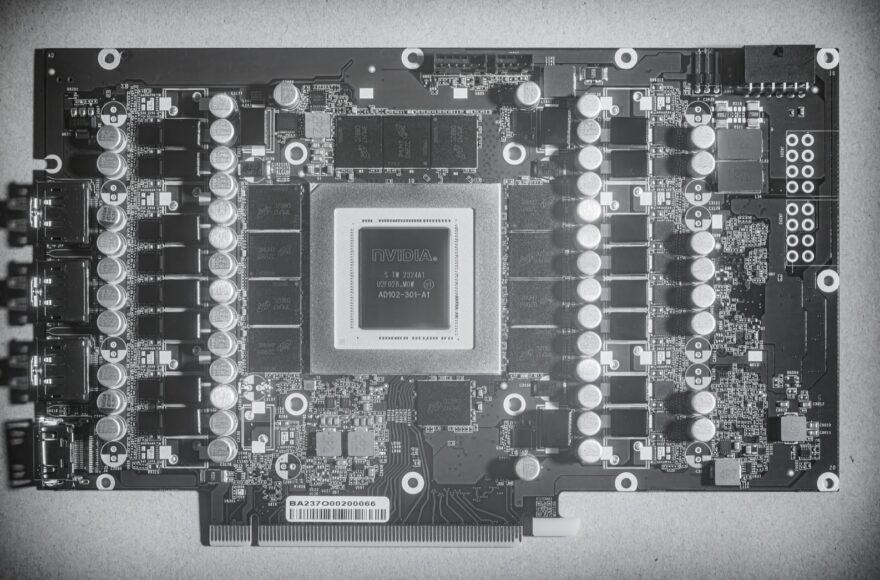
Crescent Island is a data center GPU purpose built for AI inference. It carries 32 Xe cores and 256 XMX engines based on the Xe3P architecture, and it can address up to 480 GB of LPDDR5X memory. The notable constraint is the 350 watt air cooled PCIe card envelope: Intel is pitching it as a low power, easy to deploy accelerator that fits inside existing air cooled data center footprints, avoiding the liquid cooling conversions that high density accelerators often demand. The pitch is throughput per watt and per dollar, letting enterprises run larger models, longer context windows, and more concurrent agents without rebuilding their cooling.
The NPU question sits one layer down. Crescent Island is a GPU, not a neural processing unit, but the same workload, running inference efficiently at the edge and in the rack, is exactly what we unpacked in our explainer on what an NPU is and in our NPU vs GPU vs CPU comparison.
Wildcat Lake reaches the edge
Wildcat Lake, branded as Intel Core Series 3, is the client and edge piece. Built on 18A, it pairs 2 performance cores and 4 efficiency cores with integrated Xe3 graphics featuring XMX acceleration and an NPU rated at up to 17 TOPS for hybrid AI. It supports up to LPDDR5X-7467 memory and integrates WiFi 7 and Bluetooth 6.0. Intel says it is the first processor to use UCIe, enabling cost effective multi chip package designs for mainstream AI platforms, targeting price sensitive laptops and intelligent edge appliances.
The three architectures share a theme: agentic AI is treated as a system level workload that needs CPUs, GPUs, memory, interconnects, and packaging working together, not a single faster chip. Diamond Rapids supplies the orchestration foundation, Crescent Island attacks inference cost, and Wildcat Lake pushes AI into everyday client and edge hardware. Intel anchored the story on its own foundry and open standards, positioning the portfolio for deploying agentic AI at scale as the Hot Chips presentations proceed.