Indian quantum computing company QpiAI opened its quantum chip foundry in Bengaluru on August 17, bringing the design, fabrication, and packaging of superconducting processors into a single domestic facility. In an announcement posted the same day, the company said the inauguration strengthens India’s capability to design and manufacture quantum processors and build full-stack quantum computer systems.
The facility was inaugurated by Priyank Kharge, Karnataka’s minister for information technology and biotechnology, with Abhay Karandikar, a member of India’s NITI Aayog planning body, as guest of honour. Officials from India’s National Quantum Mission also attended, including mission director J. B. V. Reddy and Ajai Chowdhry, chairman of the mission’s governing board. QpiAI says the foundry’s second phase runs an eight-inch fabrication line that can produce flip-chip superconducting processors with as many as 128 qubits, with a third phase scheduled for 2027 designed to reach processors containing up to 10,000 physical qubits, The Quantum Insider reported.
The Bengaluru facility consolidates the full device manufacturing flow in-house: advanced lithography, superconducting thin-film deposition, precision etching, metallisation, flip-chip integration, packaging, metrology, and device characterisation, all inside an integrated quantum-chip development environment. Founder and chief executive Nagendra Nagaraja told YourStory, as reported by The Quantum Insider, that existing semiconductor foundries cannot manufacture all of the specialised devices quantum processors require, which pushed the company to build its own capability. “Quantum computing today is being held back because there is not enough innovation in manufacturing,” he said.
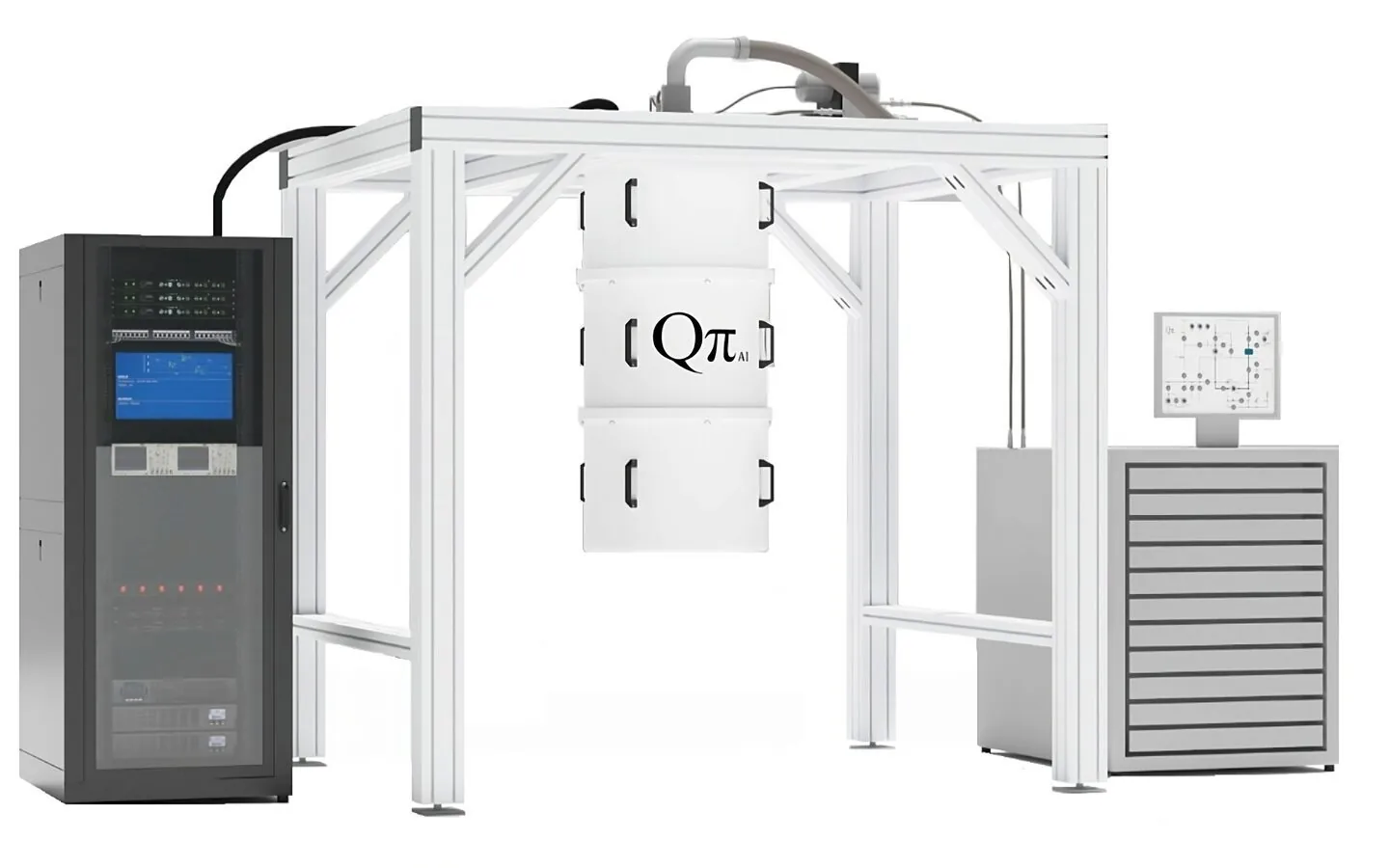
QpiAI has fabricated four processors so far: the eight-qubit QVidya, the 25-qubit Indus, and the 64-qubit Kaveri, which use superconducting transmon circuits, plus the nine-qubit Yukti, built on a variation of fluxonium technology. The process builds on the wafer-scale flip-chip approach already used in Kaveri, which QpiAI says delivers higher qubit density and low-loss packaging for chips that must scale beyond current lab-generation systems. The company says Yukti has shown promise for developing error-corrected logical qubits, in which multiple physical qubits are combined with error-correction methods designed to protect quantum information from noise. The 10,000-qubit manufacturing goal is tied to that work, though physical qubit counts alone do not establish how useful a quantum computer will be; error rates, coherence times, and the ability to operate many qubits together matter just as much.
QpiAI describes the operation as the largest quantum foundry of its kind in Asia, with Class 100 and Class 1,000 cleanroom areas and room for additional manufacturing equipment as it expands. The opening arrives as chipmaking capacity has become a strategic issue across the industry, from the image sensor venture Sony and TSMC finalized in Japan to the $3 billion R&D lab expansion Lam Research announced this month. For an Indian startup, running the fabrication line in-house also insulates the roadmap from export controls and overseas supply chains that already shape the wider semiconductor market.
The opening also aligns the company with India’s National Quantum Mission, the government program whose mission director and governing board chairman attended the inauguration, according to QpiAI’s announcement, which framed the foundry as a step toward designing, fabricating, testing, and improving quantum processors in India and reducing dependence on overseas infrastructure. QpiAI’s existing systems, including its Gen-1 25-qubit superconducting computer and the 64-qubit Kaveri chip, are installed at its Bengaluru labs, and the company says the foundry now underpins the full-stack quantum systems, cloud access, and enterprise deployments it sells. The third phase of the foundry is scheduled for completion in 2027.